
Omega-3 During Resistance Training: New Trial Finds No Extra Muscle or Strength
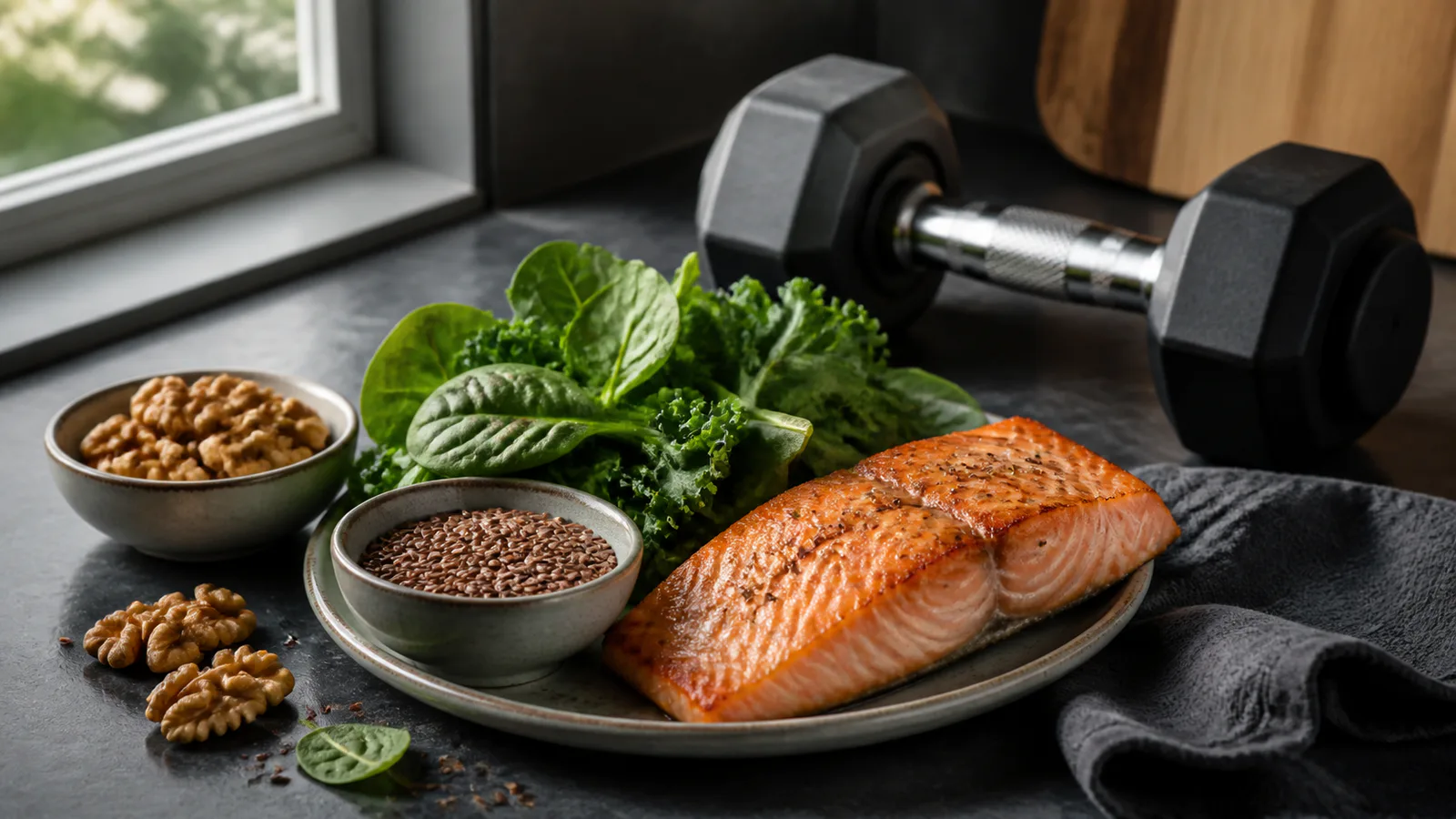
Omega-3 fats reached the muscle in a new 14-week trial, but the hoped-for performance advantage did not appear. Resistance-trained men who received omega-3 supplementation increased the omega-3 content of their skeletal muscle, yet they did not gain more muscle, strength, or anabolic-signaling activity than the placebo group.
This is a useful null result. It tested trained participants, supervised the lifting, measured muscle at several levels, and enrolled men whose habitual protein intake was already adequate. It does not show that omega-3-rich foods lack health value. It shows that, in this specific setting, adding a large supplemental dose did not amplify the adaptations to training.
Who took part and what they did
The randomized, double-blind, placebo-controlled trial included 46 resistance-trained men with an average age of 28.1 years. Their reported habitual protein intake averaged 1.8 grams per kilogram of body mass per day, and eligibility required at least 1.6 g/kg/day. That distinguishes the sample from people whose diet is short on protein.
Participants were assigned to either omega-3 polyunsaturated fatty acids or placebo while completing 14 weeks of supervised lower-body resistance training twice per week. The omega-3 condition supplied 6.3 grams per day of n-3 PUFA. That number describes the research protocol; it is not a supplement recommendation.
Adherence was high. The paper reports more than 94% adherence to supplementation and more than 96% attendance at training sessions. Strong compliance reduces the chance that a group difference was hidden simply because participants ignored the intervention.
Training worked in both groups
Both groups improved. Lean mass, maximal dynamic strength, rectus femoris and vastus lateralis cross-sectional area, vastus lateralis muscle-fiber cross-sectional area, and minimum Feret’s diameter all increased over time.
The omega-3 group also showed marked incorporation of n-3 PUFA into skeletal muscle. That biochemical change confirms the supplement was absorbed and altered tissue fatty-acid composition. Despite that, the researchers found no between-group advantage for hypertrophy or strength.
They also measured phosphorylation of mTOR, p70S6K, and 4E-BP1 at rest and four hours after exercise, before and after the intervention. These proteins are commonly examined in the signaling network related to muscle protein synthesis. The study found no omega-3 effect on those signaling outcomes between groups or over time.
The distinction between a mechanistic change and an outcome change is central. A supplement can alter a blood or tissue marker without producing more muscle or a larger lift. Here, even the planned signaling measures did not reveal an added anabolic response.
Why earlier expectations were plausible
Omega-3 fatty acids have been studied for effects on inflammation, cell membranes, and the muscle’s response to amino acids. Some research has suggested potential benefits in older adults or in settings where anabolic sensitivity is impaired. That gave researchers a reason to test whether trained young men might get more from the same lifting program after omega-3 incorporation into muscle.
This trial’s answer was no under the tested conditions. The participants were already trained, ate ample protein, and were not described as having an impaired anabolic response. Their training itself produced measurable gains, leaving less room for an add-on effect than might exist during disuse, aging, or dietary insufficiency.
The authors specifically point to populations with impaired anabolic responses, periods of disuse, or caloric restriction as areas for future study. That is a research direction, not evidence that supplementation works in those situations.
What the trial does not say
The study did not compare salmon, walnuts, or other foods with a low-omega-3 diet. Food choices carry protein, micronutrients, fiber, and energy that cannot be reduced to one fatty acid. The result also does not evaluate cardiovascular outcomes, triglycerides, or clinical indications for which a clinician might consider omega-3 products.
It enrolled healthy adult men and focused on a 14-week lower-body program. Results may differ in women, older adults, people with low baseline omega-3 intake, or athletes dieting aggressively. With 46 participants, the trial can detect meaningful differences the study was powered for, but it cannot rule out every small effect.
Nor did the trial set dietary reference intakes. A null hypertrophy result does not determine how much fish or plant omega-3 a person should eat for general nutrition. Those questions depend on the nutrient, country-specific guidance, allergies, overall diet, and medical context.
The dose was also substantial. More is not automatically better, and high-dose supplements can interact with medical conditions or medications. Anyone considering a supplement for a clinical reason should discuss it with a qualified healthcare professional rather than copying a study protocol.
The bodybuilding use case
For a lifter already meeting protein needs, the study shifts the burden of proof. Omega-3 supplementation should not be presented as a reliable hypertrophy multiplier on the basis of general anti-inflammatory language or cell-signaling theory. The participants’ muscles incorporated omega-3, yet the outcomes that matter to bodybuilders did not improve beyond placebo.
That leaves ordinary priorities intact: a sufficient diet, progressive training, adequate sleep, and a workload that can be recovered from. The ACSM resistance-training summary in this batch explains why training variables have a much stronger direct evidence base for strength and hypertrophy.
The primary record is the randomized trial indexed by PubMed (PMID 42415329; DOI 10.1017/S0007114526107910), published online July 8, 2026, in the British Journal of Nutrition. The authors’ conclusion is appropriately bounded: omega-3 did not enhance hypertrophy, strength gains, or anabolic signaling in healthy men with adequate protein intake during this program.
Readers can follow additional sports-nutrition coverage in the Diet archive. The useful decision from this paper is not to remove omega-3 foods from a balanced diet. It is to stop treating tissue incorporation as proof of extra muscle growth.
More Diet
 Diet
DietVegan Diet, Muscle Loss, and Resistance Training in Older Adults: New Trial
In a 12-week trial, a self-selected vegan diet reduced protein intake and muscle measures in adults over 65. Resistance training mitigated, but did not erase, the losses.
 Diet
DietFood Order for Athletes: Carbs First or Vegetables and Protein First?
In 14 trained footballers, eating carbohydrate last lowered the early glucose rise but increased hunger and cravings. Later food intake did not change.
 Diet
DietCreatine With Resistance Training After 60: Strength, Muscle, and Function Evidence
A 2026 meta-analysis of 11 trials found a modest strength benefit when adults over 60 combined creatine with resistance training, while muscle and function estimates remained uncertain.